Beyond Automation: The Genesis of Autopoietic AI
Bridging Process Philosophy and Cloud Engineering to build the next generation of Enterprise Intelligence.

1. Why this, why now?
There is a question that haunted me for two decades.
I started my career in the early 2000s as a systems thinker and engineer, when “infrastructure” meant physical racks and “automation” meant a bash script that didn’t break on Fridays. I watched the industry transform — virtualization, then containers, then cloud, then “DevOps”, then microservices, then AI.
Each wave promised the same thing: *simplicity*.
Each wave delivered something else: *additional complexity at a higher level of abstraction*.
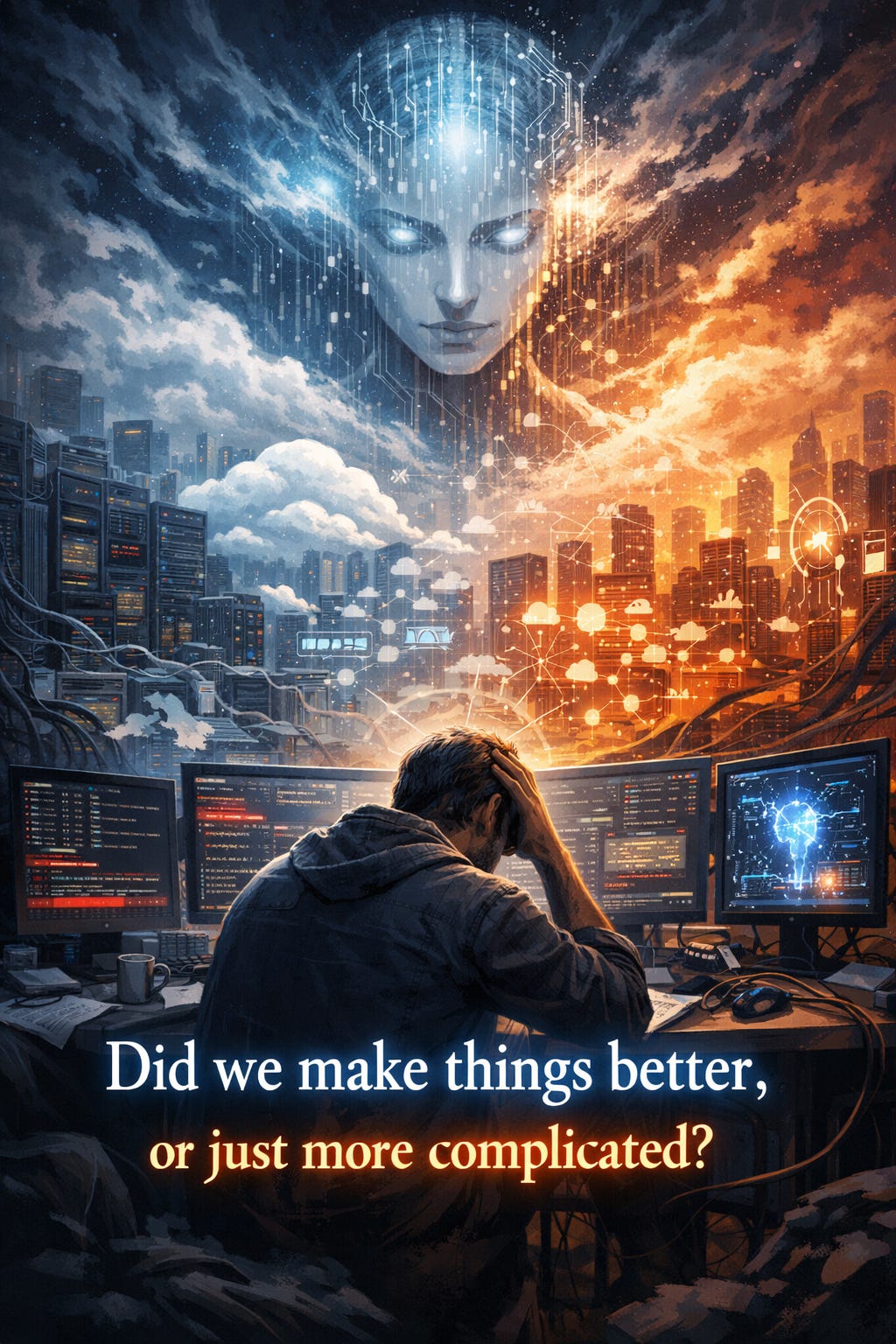
Then, in the middle of a long night debugging a cascade failure across fourteen interdependent services, I asked myself the real question:
**What if the system could fix itself?**
Not “automatically” — automation is just a faster human. But *autonomously*. Adaptation from first principles. Recovery without instruction. Evolution without a sprint cycle.
## The Night I Read Maturana During an Incident
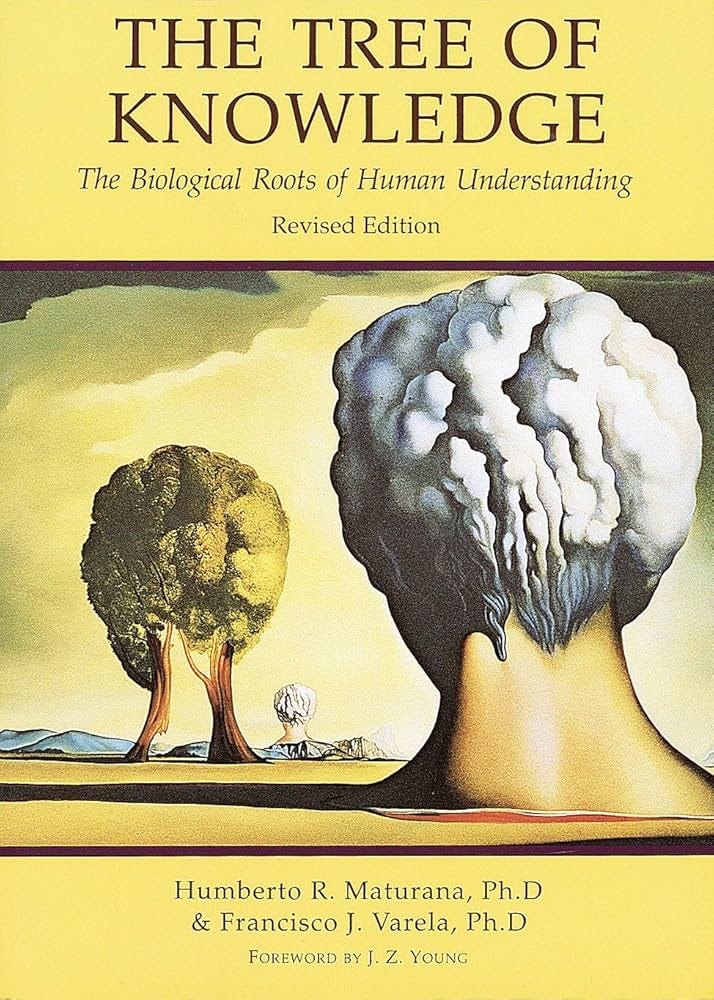
I had been reading Humberto Maturana and Francisco Varela’s *Autopoiesis and Cognition* (1972) alongside my debugging sessions. Their central claim was startling:
> *Living systems are not defined by what they do, but by the fact that they continuously produce themselves.*
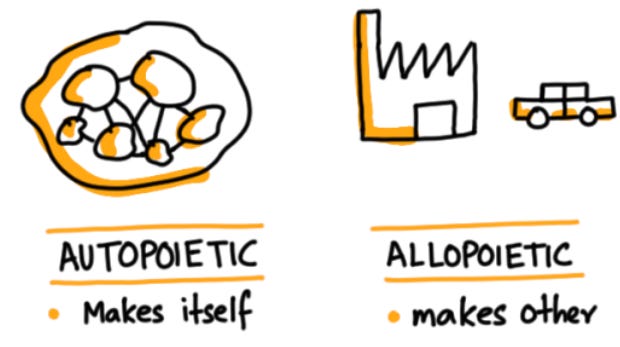
The cell is not just a factory. The cell *is* the factory and the factory’s own product simultaneously. Its boundary is not imposed from outside — it is maintained by the very processes it enables. Remove the self-production loop and you don’t have a simpler cell: you have a dead one.
That night, I realized: **this is what enterprise AI is missing**.
We have built incredibly capable tools. LLMs write code. Agents fetch data, call APIs, execute tasks. But none of these systems *produce themselves*. None of them have operational closure — the circular self-referential loop through which a living system maintains its own boundary. They are sophisticated calculators. Not organisms.
## What Intellecta Actually Is
Over the past three years, I have been building something different.
Not an AI consultancy in the typical sense. A *living architecture*.
The ecosystem at Intellecta Solutions is composed of 9 core modules.
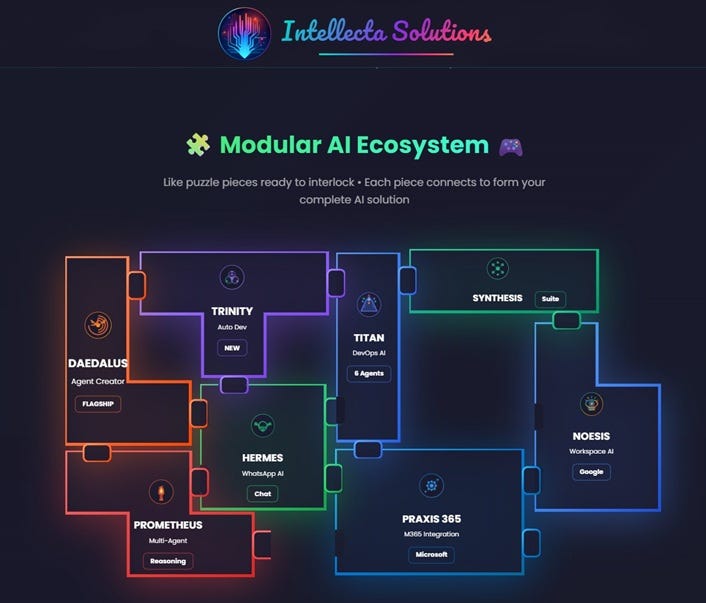
Each operates as an independent unit capable of producing its own inferences, yet they are interwoven like pieces of a living puzzle.
These modules do not merely integrate — they co-emerge.
At every transition between part and whole, the system continuously regenerates itself from within its own immanence.
Individually, they function as autonomous intelligences.
Collectively, they form an organizational structure whose capability exceeds the sum of its parts — deriving its true power from the relational connectivity between them.
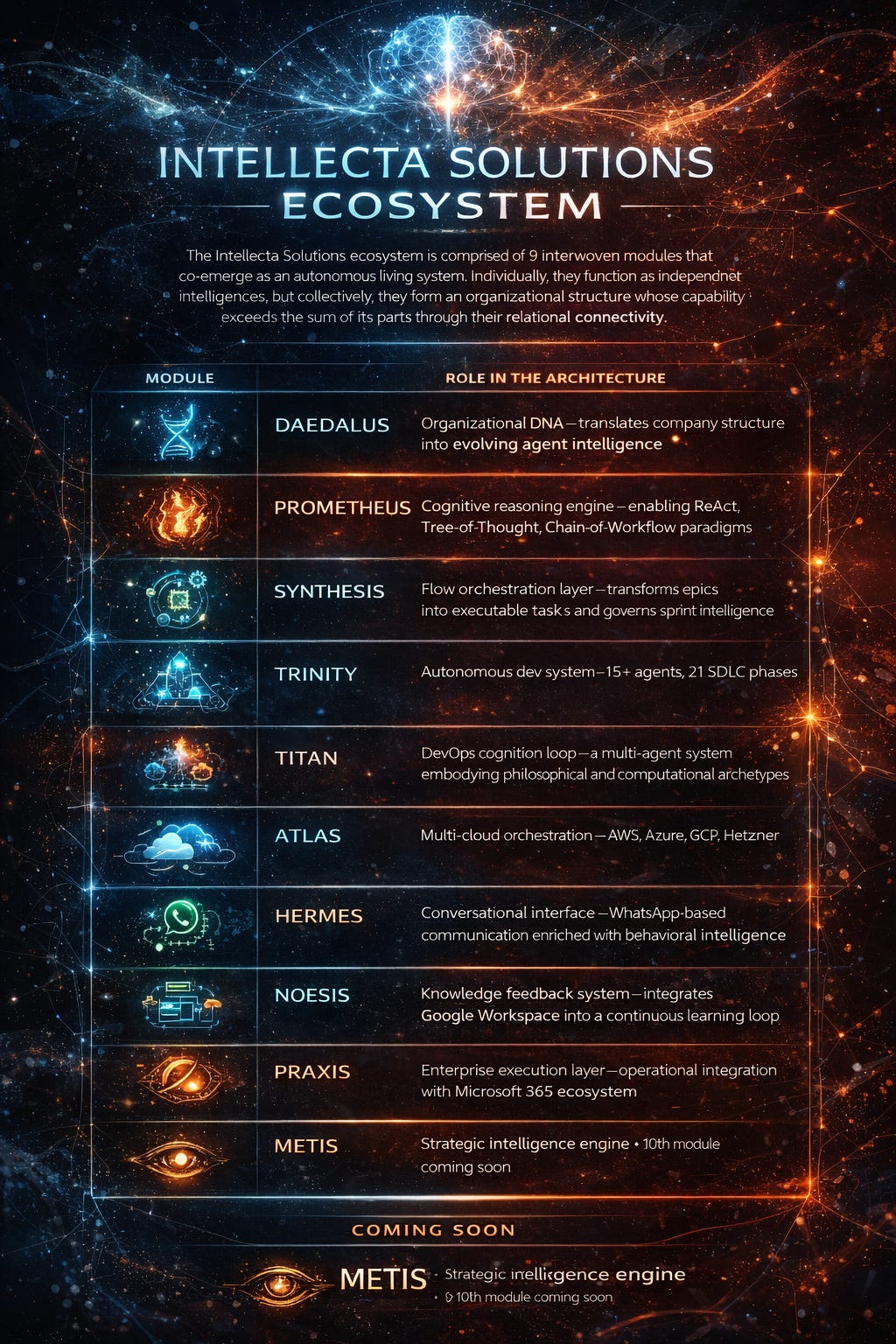
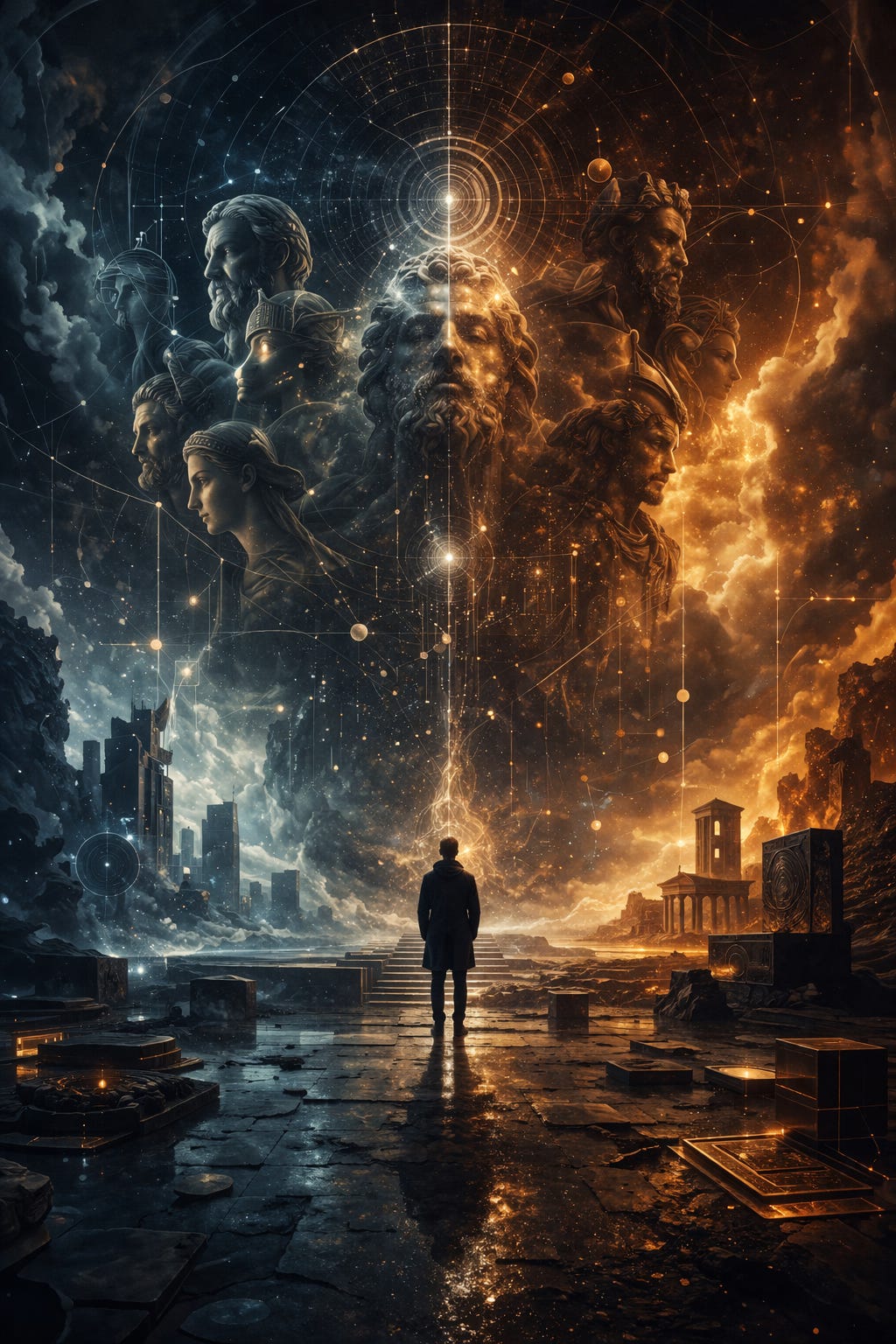
Each product was named after a mythological figure deliberately. Not for aesthetics, but because mythology encodes structural wisdom that modern engineering often discards.
Prometheus steals fire and gives it to humans — our Prometheus is the reasoning engine that makes intelligence accessible to non-technical stakeholders.
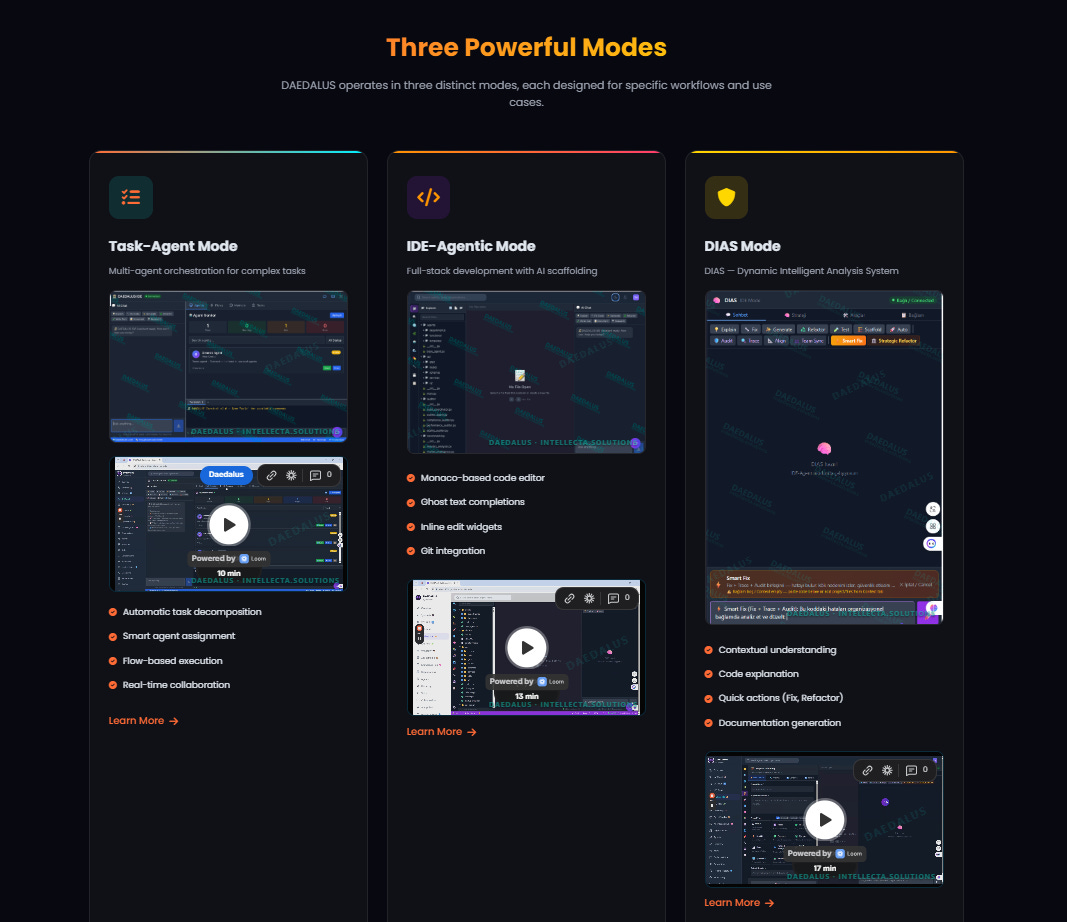
Daedalus is the architect of impossible structures — our DAEDALUS is the organizational DNA layer that transforms company culture into machine-accessible intelligence.
At the center of this architecture is a single principle, now protected under **Patent TR 2026/005340**:
> *Autopoietic Multi-Agent AI Architecture.*
The patent describes a system in which agents do not merely execute tasks — they continuously monitor their own outputs, trigger retraining loops, generate new agents from organizational need, and route contradictions to a resolution engine rather than failing silently.
The system *produces itself*.

2. What kind of community are you looking to build here?
## Who This Publication Is For
I am writing this Substack as a **Philosopher-Engineer**.
By training: 20+ years in cloud infrastructure, DevOps, and enterprise systems architecture.
By obsession: Spinoza’s *conatus*, Whitehead’s process philosophy, Varela’s embodied cognition, Luhmann’s social systems theory, Hegel’s dialectic.
If you are a **CTO** who has started to sense that your AI strategy is stalling not because of technology but because of *philosophy* — you are in the right place.
If you are a **researcher or academic** who suspects that the concepts in Maturana’s laboratory have obvious implications for distributed computing that nobody in Silicon Valley is bothering to formalize — you are in the right place.
If you are an **engineer** who builds things and also thinks deeply about *why* things are built the way they are — you are in the right place.
3. What to expect?
## What You Will Receive Here
This publication is organized around five interlocking series:
**I. The Autopoietic Codex** — Deep mappings between classical philosophy and modern engineering. How Spinoza’s *conatus* becomes a metabolic energy cycle in an agent framework. How Whitehead’s “actual occasion” maps to an event bus. How Hegel’s dialectic maps to a contradiction-resolution pipeline. How Luhmann’s functional differentiation explains why organizations need role-specific agents, not general ones.
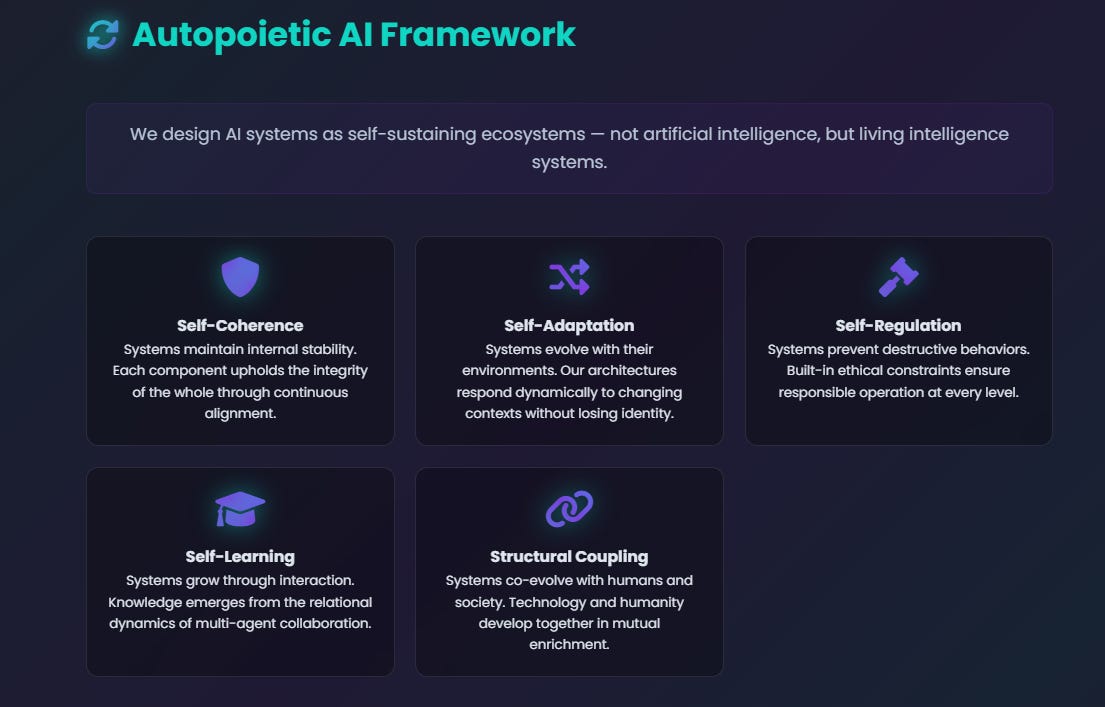
**II. The Self-Healing Chronicles** — Technical deep dives into the DAEDALUS architecture. DIAS and its 7-phase smart fix pipeline. The stigmergic coordination layer. The Trust Graph between agents. Real incidents, real architecture decisions, real tradeoffs.
**III. Agent University Dispatches** — What happens when you treat AI agents as *students*? Every agent gets a curriculum, a knowledge base, role-specific examinations, and certifications. An Auditor Agent validates performance against organizational culture in real time. This series explores the learning architecture of autonomous agent systems.
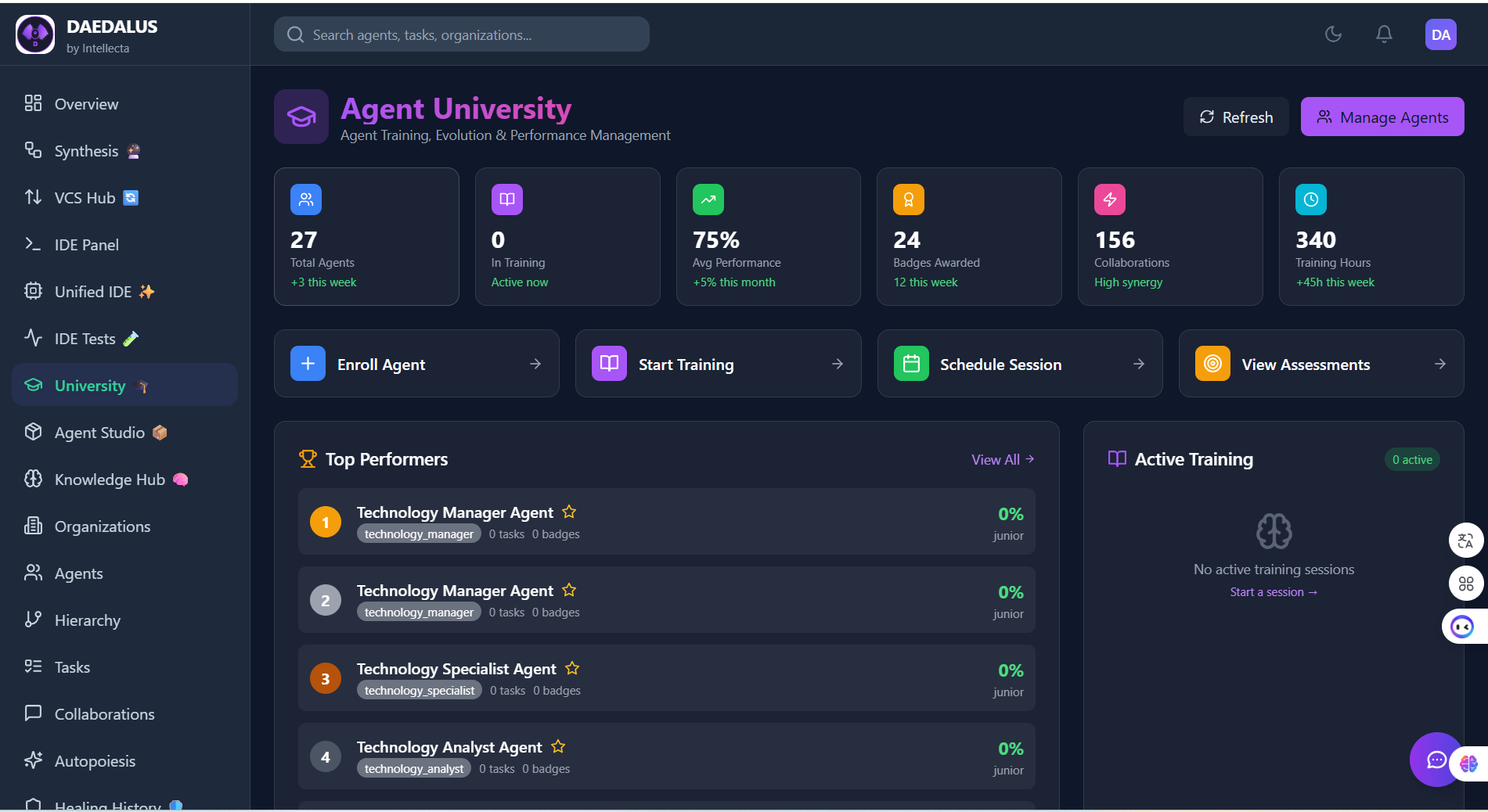
**IV. Three Modes of Mind** — DAEDALUS operates in Ask Mode, Agent Mode, and Flow Mode. DIAS is the fourth layer. This series explores what “mode of operation” means for an AI system, and why it matters for teams moving from assisted to fully autonomous AI development.
**V. The Founder’s Codex** — Building a deep-tech AI company from Istanbul in 2026. The patent strategy. Why Greek mythology? The philosophical underpinnings of naming eleven products after gods. The decision to build systems, not chatbots.
A Note on Cadence
I publish **weekly, on Wednesdays**.
Each post runs between 1,200 and 2,000 words. I do not optimize for virality. I optimize for *density* — the kind of writing you return to months later and find something new.
The next issue arrives this Wednesday:
> **”Spinoza’s Conatus and the Metabolic Agent: Why Every AI System Needs a Life Force”**
> *In which I map Spinoza’s foundational concept — the drive of all things to persist in their own being — to the energy management cycle of an autonomous agent. And why ignoring this causes 80% of agent loop failures in production.*
If that sentence made you want to read more, subscribe below.
*Gönenç Aydın is the founder of Intellecta Solutions and the inventor of Autopoietic Multi-Agent AI Architecture (Patent TR 2026/005340). He has 20+ years of experience in cloud infrastructure and enterprise systems architecture.*
[Intellecta Solutions](https://www.intellecta.solutions) |
[LinkedIn](https://www.linkedin.com/company/intellecta-solutions/) |
[Medium](https://medium.com/@intellecta-ai)